
 lakatoskoves.hu


Following the change of government in Hungary in April 2026, attracting foreign investment from international markets has featured prominently among the new Government’s economic priorities. However, the anticipated recovery in M&A activity has yet to materialise. Hungary’s complex foreign direct investment screening framework, and the uncertainty it can introduce into transaction timetables and outcomes, has been among the obstacles facing investors.
A recently published draft law would take a significant step towards simplifying that framework. With effect from 1 January 2027, the proposal would abolish Hungary’s broadly applicable Special FDI Regime (as defined below) and would introduce a more targeted notification requirement within the existing General FDI Regime (as defined below). If adopted in its present form, the changes could substantially reduce the number of transactions requiring Hungarian FDI clearance.
The current Hungarian FDI framework
Hungary currently operates two independent investment screening regimes: the General FDI Regime, based on Act LVII of 2018, and the Special FDI Regime, set out in Chapter IV of Act L of 2025. Depending on the investor’s origin and ownership structure, the target’s activities and the transaction structure, an investment may require prior ministerial clearance under one or both regimes.
The General FDI Regime focuses on national security and certain essential services, including defence and dual-use manufacturing, specified financial and insurance activities, utilities, electronic communications and certain electronic information systems. It covers qualifying direct and indirect investments by non-EU/EEA/Swiss investors, including investments through entities controlled by such investors.
The Special FDI Regime reaches across much of the Hungarian economy, covering 25 sectors and more than 60 listed activities, whether pursued as a target’s principal or ancillary activity. It applies to acquisitions of ownership interests and certain other corporate transactions, including capital increases, mergers and demergers, subject to the relevant ownership and investment thresholds. Even acquisitions by purely EU/EEA/Swiss investors may require clearance where they confer majority influence and the investment reaches HUF 350 million (approx. EUR 960,000). The regime also covers acquisitions of assets indispensable to the target’s activities, transfers of rights to use or operate those assets, and their provision as security.
THE PROPOSED RULES FROM 1 JANUARY 2027
The draft would repeal the Special FDI Regime in its entirety and introduce a new notification category (“New Notification Category”) instead under the General FDI legislation. The existing substantive screening requirements for activities already covered by the General FDI Regime would remain in place unchanged.
The New Notification Category would cover the following six sectors:
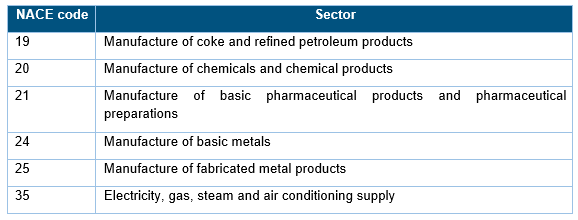
For the New Notification Category, notification would be required only where all of the following conditions are satisfied:
• the foreign investor is a citizen of a country outside the EU, the EEA and Switzerland, or a legal entity or other organisation registered in such a country;
• the investor acquires direct majority influence in a Hungarian company through an acquisition of an ownership interest (meaning more than half of the voting rights or dominant influence through board appointment rights or voting agreements);
• the target carries out, as its registered principal activity, an activity falling within any class of the 6 sectors listed above;
• either the target’s net turnover in its last completed financial year is at least HUF 180 billion (approx. EUR 495 million), or the value of the acquisition is at least HUF 10 billion (approx. EUR 27.5 million).
The two financial thresholds are alternatives: meeting either would be sufficient, provided the remaining conditions are also satisfied. An acquisition would fall below the financial thresholds only if both the target’s relevant turnover and the transaction value are below their respective thresholds.
These thresholds would apply only to the New Notification Category and would not exempt transactions independently caught by the existing General FDI Regime. For example, where the target manufactures dual-use items covered by the existing rules, a direct or indirect acquisition may remain notifiable, subject to the applicable investor, shareholding and influence tests, regardless of the new turnover and transaction-value thresholds.
WHAT WOULD CHANGE FOR TRANSACTIONS IN PRACTICE
The proposal could materially reduce the scope of Hungarian investment screening.
A narrower range of activities. The broad sectoral coverage of the Special FDI Regime would be replaced by six specified sectors. Transactions involving businesses outside those sectors would cease to require clearance under the replacement rules, provided they are not independently caught by the existing General FDI Regime.
Principal activities only. An ancillary activity would no longer, by itself, trigger notification under the New Notification Category. This could remove a significant source of filing obligations for companies whose registered principal activity falls outside the listed sectors.
A narrower investor definition. The New Notification Category would not extend to EU, EEA or Swiss investors, including entities established in those jurisdictions but controlled by third-country investors. Such entities could nevertheless remain subject to the existing General FDI rules where the target carries out an activity covered by those rules.
Fewer minority investments subject to screening. The New Notification Category would require direct majority influence. Minority acquisitions that do not confer dominant influence through special control rights and agreements would therefore fall outside it.
Asset transfers and security arrangements outside the new notification category. Asset transfers, operating-right arrangements and the provision of assets as security would not, in themselves, trigger the new notification obligation. Existing General FDI rules concerning specified infrastructure and operating rights would still need to be considered.
Higher financial thresholds. Even within the six sectors, acquisitions would fall outside the New Notification Category where both the target’s turnover and the transaction value are below the prescribed thresholds.
Removal of the Special FDI pre-emption right for solar power transactions. Repealing the Special FDI Regime would also remove the statutory basis for the State’s specific pre-emption right over qualifying acquisitions of solar power companies, as it was granted under the Special FDI Regime.
Regarding the procedural aspects, the draft would extend the relevant provisions of the General FDI Regime’s existing notification, review and enforcement framework to the New Notification Category, notifications under both categories would be submitted to the Minister of the Interior. Ministerial clearance would remain a prerequisite for registration in the target’s share register or list of members, and the restrictions on exercising shareholder rights without clearance would also apply.
The timing benefit for investors would primarily arise from removing transactions from screening altogether. For transactions that remain notifiable, the proposal should not be understood as guaranteeing a shorter review: the General FDI framework provides for a 60-day review period, extendable by a further 60 days.
FURTHER CHANGES MAY BE NEEDED TO ALIGN WITH THE REVISED EU FRAMEWORK
The proposal should also be considered against the revised EU framework under Regulation (EU) 2026/1386, which generally applies from 17 January 2028.
The EU reform introduces a common minimum screening scope and procedural requirements and expressly extends coverage to certain investments made through EU entities controlled by third-country investors.
The Hungarian draft extends the existing General FDI procedural framework to the new notification category, rather than introducing a comprehensive procedural reform to reflect the revised EU requirements. It also leaves the General FDI Regime’s existing sectoral coverage substantially unchanged, while the new notification category excludes EU-established investors even where they are controlled from a third country.
These differences do not, by themselves, establish that the proposed Hungarian framework would be incompatible with EU law. That assessment requires consideration of the surviving General FDI rules, the EU Regulation’s mandatory minimum scope and the applicable exceptions. They do, however, indicate that further amendments may be necessary in the Hungarian system before the revised EU framework becomes generally applicable.
Investors should therefore view the proposal as a significant domestic simplification, while anticipating that Hungary’s screening framework may continue to evolve.
IMPLICATIONS FOR INVESTORS
The proposed changes would represent a significant positive step towards facilitating foreign investments in Hungary. For transactions falling outside screening, they could improve deal certainty, shorten the path to closing and reduce the administrative burden on investors and target companies. Given its narrow sectoral scope and high financial thresholds, the New Notification Category is likely to capture relatively few Hungarian targets, and even where those criteria are met, the transaction structure may place the investment outside its scope.
The proposal remains a draft and may change during the legislative process. Until the new rules take effect, parties must continue to assess and comply with the existing requirements. Particular care will be needed for transactions signed or notified before 1 January 2027, as the provisions reviewed do not expressly address the treatment of pending filings or transactions signed before, but completed after, the new rules take effect.
To download this newsletter, please click here.